
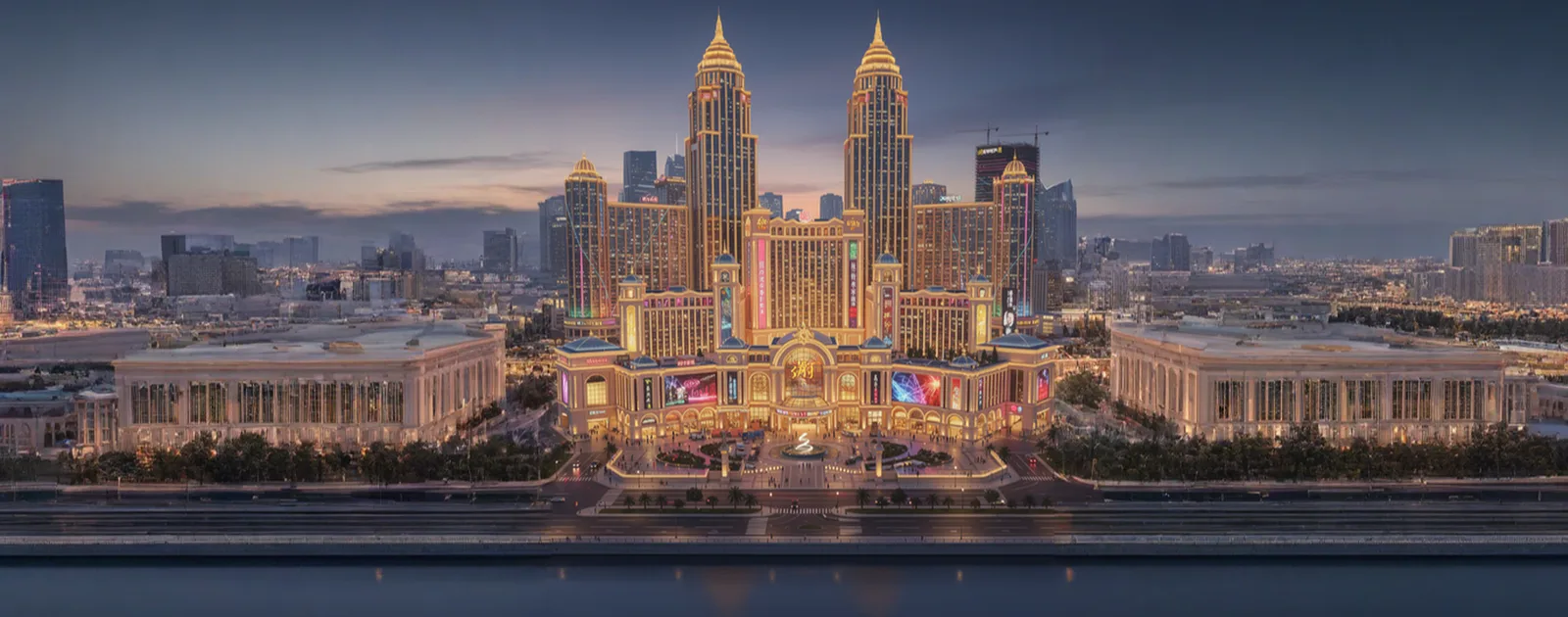
Macau: the difficult road to becoming the “Las Vegas of Asia”
Macau’s transformation into a multi-faceted tourism hub is hindered by reliance on gaming, limited hotel capacity, and insufficient entertainment options.
In Macau, requirements to develop non-gaming revenue and government incentives have so far not produced the expected effect.
The mandatory transition of Macau into a true “Las Vegas of Asia” — a multi-faceted tourism and entertainment hub where gambling is only one source of revenue — faces three major challenges. Addressing a fourth would significantly help solve the first three.
This transition is critical, as six Macau casino operators are required under concession terms until 2032 to invest USD 13.6 billion in non-gaming projects and overseas expansion.
Meanwhile, gaming revenue and concessionaire profits have yet to return to 2019 levels — before Covid and strict restrictions on junket operators, who once provided about two-thirds of gross gaming revenue. As of November, Macau’s gross gaming revenue is 16% below 2019 levels, representing a shortfall of USD 5.4 billion.
Mass market hysteria
Revenue decline occurs despite tourist flows nearly reaching the record level of 2019 — 39.4 million visitors.
“VIP clients who spent large sums have almost disappeared. They have been replaced by mass-market tourists who spend much more cautiously,” says Macau gaming veteran Andy Choi.
“EBITDA margins have decreased due to high reinvestment costs, promotions, and a shift toward the mass market. Although mass gaming historically has higher margins, declining customer quality and competition among operators erode profitability,” adds Mary Mendosa, Managing Director of Platinum Strategic Consulting Group. “Structural restructuring is needed, not just cyclical recovery.”
According to Choi, Las Vegas is an ideal example:
“Games once dominated casino revenue, now they account for less than a third. The rest comes from entertainment, restaurants, shows, and other non-gaming sources.”
However, as Seaport Research analyst Vitaliy Umansky notes:
“Macau is not Las Vegas and, at least for now, will not become it.”
Reason #1: Macau is overly dependent on gaming and premium players
Even the most diversified operator, Sands China, earns only 20% of revenue from non-gaming segments (up from 17% in 2019). Industry data shows over 70% of EBITDA still comes from premium gaming.
“The Macau market essentially relies on fewer than a thousand players. Bets are astronomical. I saw someone at MGM bet one million Hong Kong dollars per hand,” says Anthony Lawrence, Director at Intelligence Macau.
“Nobody believes in the mass market anymore — and it’s no surprise.”
MGM China CEO Kenneth Feng notes the key problem is China’s income level, six times lower than the US nominally and three times in purchasing power.
Added to this is a complex economic situation and geopolitical instability:
“Military conflicts and the US–China trade war reduce consumer spending,” explains Choi.
Narrow customer base
The number of Chinese tourists who can afford non-gaming leisure in Macau is limited. And if someone can afford Macau, they could also visit Tokyo, Bangkok, Europe, or Australia.
“If you’re not gambling — what brings you here? Shopping? Shanghai has it all,” summarizes Umansky.
The focus on premium players has led to the “premiumization of Macau.” Cotai has become one of the most concentrated luxury hotel areas in the world — Londoner, Raffles, Capella, W, Morpheus, Wynn Palace, Grand Lisboa Palace, Karl Lagerfeld, Palazzo Versace.
The price of this is fewer rooms and higher rates. Cotai currently has 25,178 rooms — 351 fewer than in 2018.
Reason #2: Hotel shortage
Las Vegas has 150,000 hotel rooms, Macau fewer than 50,000, with near-full occupancy on weekends.
“The biggest opportunity for Macau is to sharply increase room capacity,” says Choi.
To seriously compete in the MICE market, Macau would need to double its hotel supply. For comparison: Hong Kong — 93,000 rooms.
Operators are willing to build, but the government does not count these investments toward mandatory non-gaming expenditures, slowing the process.
Hengqin as a “backup option”
Authorities suggest using hotels on nearby Hengqin Island. It is connected by light metro and allows simplified border crossing for tourists from mainland China.
However, Hengqin already has massive shopping malls, restaurants, and Chimelong parks, reducing the incentive to spend money in Macau.
Reason #3: Macau simply has too few attractions
“Not one or two attractions are needed, but hundreds,” says Umansky.
Operators are trying: House of Dancing Water show, waterparks, Dolby cinemas, museums, arenas, concerts. But this is still insufficient.
“There’s no true must-see attraction,” says Choi, comparing it to the Sphere in Las Vegas.
Reason #4: Lack of unified transformation management
“No one manages Macau’s transformation,” says Umansky directly.
Macau needs a Las Vegas Convention and Visitors Authority equivalent to coordinate marketing, events, MICE, sports, and strategic development.
Without centralized management, USD 13.6 billion in investments may not transform Macau into Las Vegas.